Bugatti is increasing the production of their million dollar super car the Bugatti Veyron. Production numbers will increase from the original "60" cars produced in the first year of the Veyron to a total of "75" annually. A spokesperson for Bugatti stated, "We want to shorten the waiting time from just over a year." One has to think, it will still be arduous to acquire one of these vehicles or even see one on the road with just small increase of 15 cars in the production line, but Bugatti in fact wants to keep the car as exclusive as possible.
While the production numbers for the Veyron have increased, there are currently no plans to "change" the performance of the vehicle. With an incredible 1,000 horsepower one has to wonder if this is enough horsepower to keep the Veyron at the top of the super-car food chain in the twentieth century.
Will the Bugatti Veyron's clientele want more out of their super car as the production continues to its speculated production run of "300"? For a million dollars I think so.
Wednesday, November 7, 2007
Bugatti Increases Veyron Production

Ultimate Aero TT makes one more attempt for braking speed record
Shelby SuperCars (SSC), manufacturer of the world's most powerful production car, the Ultimate Aero TT, announced today that speed testing for the title "World's Fastest Production Car" will be finalized by the end of August. Speed testing is being conducted in the company's home state of Washington and is being validated by Guinness World Records.
There is a standard procedure outlined by Guinness World Records to validate a land speed record. The vehicle must drive the predetermined course, turn around, and drive back the opposite way within one hour. This is to negate any discrepancy there may be in the course or conditions. Top speeds from each run are then averaged to obtain the official speed. This method has been used for decades as the benchmark for land speed record attempts.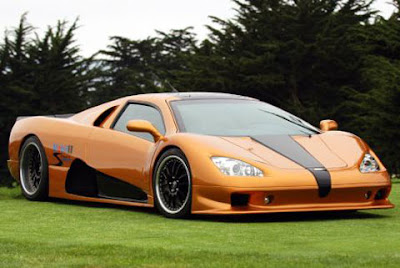
Dewetron, a company known for performance testing of missile, train, aerospace, and automotive capabilities will accurately monitor and measure the speed of the Ultimate Aero TT for the record run. Dewetron's equipment is precise that Guinness World Records approved their systems as a replacement for the standard 1,000m laser traps. Dewetron utilizes 4-12 satellites and numerous onboard sensors to track a vehicle's speed.
The lack of access to a US-based proving ground able to accommodate the Ultimate Aero TT's top speed presented SSC with a massive challenge. After scouring the country for months, SSC found the solution in their home state of Washington when they were granted the opportunity to close public highways for testing. Finding appropriate roads eligible for closure proved to be a tedious process as SSC's teams scouted the sites first hand. After a potential site was identified, the company would need to apply for a road closure permit. Hiring police, a crew to man the closed section, and securing insurance for the high-speed test sessions were just a few of the undertakings necessary to be granted the rare closure of public roads.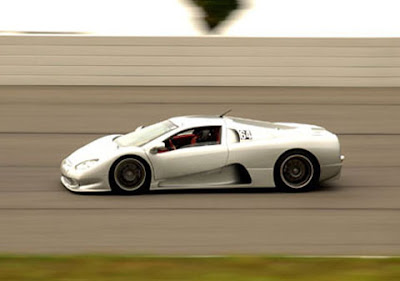
Since the first test session, SSC has successfully concluded several rounds of high-speed safety and durability testing for each assembly of the Ultimate Aero TT. During these sessions, SSC was able to verify all the engineering specifications as well as aerodynamic data posted at NASA's Langley wind tunnel. Throughout the test sessions, the measured top speed of the Ultimate Aero TT continued to rise, achieving a speed of 241.4 mph at a throttle position of only 71% during the latest transmission durability test. After reviewing all test data, Jerod Shelby and the SSC engineering team feel comfortable in maximizing the capabilities of the 1183 hp Ultimate Aero TT.
GT-R speculation: More tech details emerge
The GT-R may be the most eagerly anticipated Nissan in the history of the Japanese automaker. New information has been coming to us in a steady leak for months, and this time we're getting more details from the folks over at 7tune. Nissan's VQ family of engines won't apply to Nissan's affordable supercar, instead a new VR designation will befit a new 3.8-liter V6 with twin turbos and a bad-ass output of 480hp. Nissan will use plenty of high-quality, light weight materials, like titanium for the intake valves, a carbon fiber hood, and magnesium alloy for the oil pan, cam covers, and exhaust, while Variable Valve Event Lift (VVEL) will help crank out maximum power and efficiency. Nissan is using a platform that they term "Midship Premium", and much of the weight is being concentrated in the middle of the car for better handling.
We're as excited about the coming of the GT-R as most of you are, and the more we hear about Sir Ghosn's crowned jewel, the better it sounds.
Official video presentation of the new Aston Martin DBS
With the Aston Martin V12 Vanquish S ceasing production at the end of 2006, the 2008 DBS will become the top-performing and most extreme road-going Aston Martin available. Company executives describe the DBS as a thinly veiled race car adapted for the street.The DBS looks like a DB9 on steroids. It has added scoops, strakes and bulging fenders.
Protecting Your Child When Driving
Drive with peace of mind, knowing you're doing everything you can to protect your child's life when you're behind the wheel of the family car. Remember - that's precious cargo you're transporting in your back seat. Make sure your children are properly secured, before you start the car.
Buckle up for some sobering statistics on highway deaths, figures that underscore the importance of using proper child restraints for young passengers - a child car seat, booster, or seat belt.
In 2003, the National Highway Traffic Safety Administration reported that there were a total of 42,643 traffic fatalities in the United States. The age group of children up to 14 years old accounted for 5 percent (2,136) of those traffic fatalities.
An insurance trade organization official focused on why many children die in vehicular crashes. "…Kids typically die because they were out of position, meaning that the child in the seat belt, car seat, or booster was either not properly put into the restraint or the child got out of the restraint," according to Dan Kummer, director of personal lines-auto for the Property Casualty Insurers Association of America (PCI), headquartered in Illinois.
Consider sound advice from Russ Rader, spokesman for the Insurance Institute for Highway Safety, in Virginia. Many children who die in vehicular crashes were riding completely unrestrained, said Rader. "Riding unrestrained in a motor vehicle always has been the greatest hazard for children."
Rader and the American Insurance Association's David Snyder both emphasized the importance of children riding in the back seat of a car. Rader identifies the back seat as the safest spot for young passengers. "This was true before airbags, and now it's doubly true. Infants and children riding in back seats cannot be in the paths of inflating airbags," said Rader.
Snyder brought up a second reason. The back seat generally affords more distance before you hit anything hard. And, secondly, the child is less likely to hit the airbag, which can cause injury, said Snyder, vice president and assistant general counsel at AIA, in Washington, D.C.
All states have child restraint laws for riding in automobiles, with most covering children of all ages but some only address specific age groups. Thus, there can be a gap in a state law impacting children in, say, the six to 12 age group categories. These are kids who may be too big for child safety seats and too small to fit into vehicle-equipped seat belts meant for older children and adults.
An insurance industry executive explains why booster seats are important to child safety in automobiles. Booster seats are valuable because they boost your children up about four inches, enabling them to correctly fit into your car seat belts, says Carolyn Gorman, vice president in the Washington, D.C., office of the Insurance Information Institute (III).
Make no mistake - using child safety seats in automobiles won't necessarily lead to a reduction in your auto insurance premium. Various factors go into determining what rates you pay for car insurance, said Kummer, who named some - type of vehicle, a driver's hometown, number of miles driven annually, and driving record, to name a few. "Child safety issues relate to saving lives, and policyholders who don't become involved in accidents tend to pay less for auto insurance coverage than those who have faced tragedy from highway crashes," Kummer maintained.
Kummer's take on car insurance premiums gets no argument from III's Carolyn Gorman. Motorists get better insurance rates if they have a clean driving record and aren't involved in any accidents on the roadways, Gorman says. "There are no studies that I know of on the correlation between a driver's use of child safety restraints in automobiles and auto accidents, but one might conclude that those who takes steps to protect their children and other passengers in their cars are, indeed, safety conscious and are more likely to have good driving records than those who speed along the highways without wearing seatbelts."
Lastly, keep in mind some travel advice from insurance industry spokesman Tully Lehman. As a case in point, Lehman singled out section 27365 of the California motor vehicle code that stipulates that every car rental agency in California must inform customers that state law requires all children under 6 years of age who weigh less than 60 pounds to be transported in the back seat of the vehicle in a child restraint system.
In California, the car rental agency is required to provide for rental a child restraint system if the customer does not have one available, said Lehman. "Regardless of which state you and your family visit, if you're renting a car there, be sure to know the rules of the road as they apply to child safety seats, because if only for the safety of your child, you'll want to be in compliance with applicable state regulations or laws."
10+ Tips to Help You Save on Car Insurance
Most people complain about the cost of their auto insurance--hardly surprising, given that a typical policy costs at least several hundred dollars a year. Depending on your age, driving record, and other factors, your annual premium can be significantly more than that. So how can you lower your premium and save yourself money?
If you own a car and drive it, going without insurance is generally not an option. In most states, you are required by law to purchase a minimum amount of liability coverage. And you should probably have more than just the bare minimum if you want to provide yourself with adequate protection. There are steps you can take, however, to reduce your auto insurance costs without having to cancel your policy. Some or all of these steps may be appropriate for you, depending on your circumstances.
Specific ways to save money on auto insurance:
1. Shop around. One of your first steps should be to shop around. A particularly good time to investigate your alternatives is when your current policy is about to be up for renewal, especially if you find that your premium has gone up. You may be surprised to learn that auto insurance premiums for the exact same coverage on the same car can vary widely (by hundreds of dollars) between different insurers, even in states that regulate auto insurance rates.
2. Increase your deductible. For many people, raising the deductible on their auto insurance is a good way to cut the cost of the policy. Sometimes you can reduce your annual premium by 10 percent or more if you increase your deductible from, say, $250 to $500. If you do this, however, make sure you have the financial resources to handle the larger deductible when the time comes.
3. Keep an eye on your credit report. Your credit history is an important factor for most auto insurance companies. Many studies have shown a correlation between your credit history and the risk to an insurance company. Paying your bills on time and maintaining a good credit history will allow you to enjoy lower auto insurance rates.
4. Drive less. If you drive less than a certain number of miles in a year (e.g., 7,500), you may qualify for a low-mileage discount. If your insurer offers this discount, try to limit your driving as much as possible. If you commute to work, use public transportation instead of driving. When you go away on vacation, fly or take the train.
5. Don't use your car for business purposes. Since work-related driving generally subjects you to higher premiums than pleasure driving, it may be in your best interest to stop using your car for business purposes.
6. Drive more safely. You may be eligible for a price break on your policy if you maintain a clean driving record for a specified period (usually three years). A clean driving record generally means no accidents, moving violations, drunk driving convictions, etc., during that period. The best way to qualify for the applicable discount is to drive carefully and defensively at all times.
7. Buy a low-profile car. Cars are rated on a risk scale for auto insurance purposes. In general, sports cars and other high-performance, flashy vehicles are classified as higher risks because they are common targets for thieves and vandals, and because statistically, the people who own them tend to drive more recklessly. If you own such a vehicle, you will likely pay a higher premium than if you owned a station wagon, sedan, or other low-risk vehicle.
8. Move. If you live in a rural community with little crime and traffic congestion, your premium will generally be lower than if you live in an urban area where your car is more likely to be stolen, vandalized, or involved in an accident. Granted, you shouldn't move just to cut your auto insurance costs. However, this may be one of many factors in your decision if you're thinking about relocating from the country to the city.
9. Keep your car in a garage. Cars parked in garages are less likely to be stolen, vandalized, or struck by other vehicles. Using a garage to store your car may entitle you to a slight premium reduction.
10. Have safety/anti-theft devices installed. You may receive discounts on your insurance if your car is equipped with one or more of the following options: anti-lock brakes, automatic seat belts, and airbags. Similarly, anti-theft devices such as car alarms and tracking systems (e.g., Lojack) may also get you a discount because they reduce the chances of your car being stolen or vandalized.
11. Inquire about multifamily/multipolicy discounts. You may receive a discount from your insurance company if you buy more than one type of insurance through that same company (e.g., auto and homeowner's). A discount may also apply to your auto insurance if you insure multiple cars under the same policy or with the same company.
12. Other discounts Other discounts may be available if you meet certain criteria. Examples may include discounts for taking a defensive driving course, being a AAA member or staying with the same auto insurance company for a number of years. These discounts vary by company.
10 Tips to Avoid Auto Accidents
1. Avoid drinking and driving.
2. Minimize distractions such as reading newspapers or talking on the cell phone when driving.
3. Properly maintain vehicles. Tune up cars according to maintenance schedule, and especially take note monthly of tire condition.
4. Do not encourage aggressive drivers. Let other aggressive driving behavior roll off your back, or call the police. Losing your temper could worsen the situation.
5. Leave a safe distance between your cars and others. For every 10 miles per hour of speed, leave at least one car length space between your vehicle and the vehicle ahead.
6. Maintain a constant speed. Don't continually slow down or speed up.
7. Adjust mirrors properly and check the side and rear-view mirrors every 15 seconds.
8. Take defensive driving classes to improve your ability to drive and be better prepared for the unpredictable behavior of other motorists.
9. Proceed with great caution through intersections. Intersections are the center of most accidents. When entering an intersection, look left, then right, then left again to ensure the area is clear.
10. Be sufficiently aware of road conditions and be more visible. Keep your lights on at dusk and dawn and during rain, as is the law in most states. Understand basic vehicle dynamics, such as knowing how to recover from a skid.